
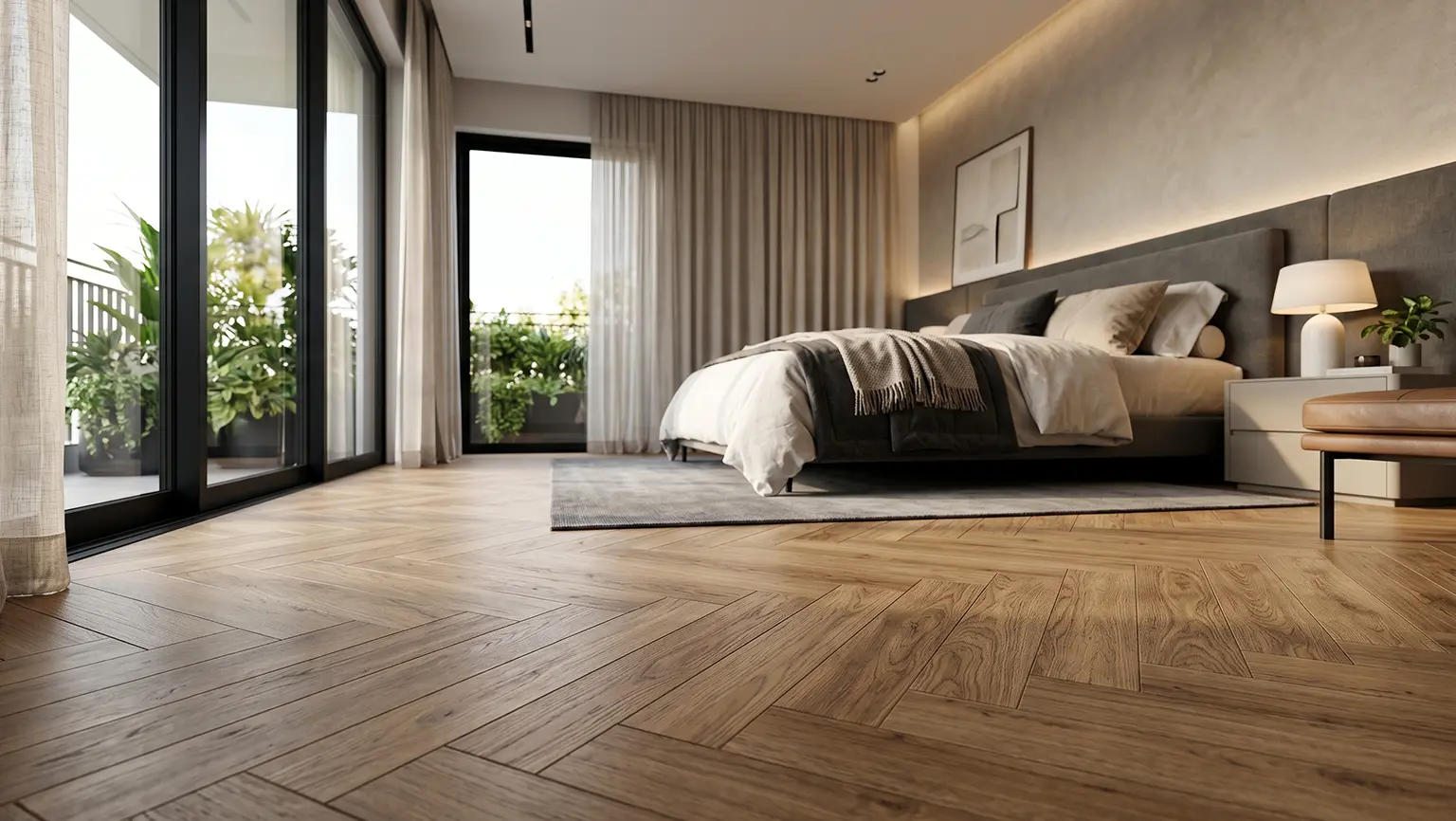
When thinking about lighting, most people focus on the type of fixtures or their distribution within the space. However, they rarely pay attention to an element that has a major impact on lighting: the flooring.
Flooring is not just a surface that covers the home, it is an element that constantly reflects and interacts with light.
Light-colored floors reflect more light, giving the space a brighter and more spacious feel, even when using less lighting.
Dark floors, on the other hand, absorb part of the light, which can make a space feel warmer and more luxurious, but may also require stronger and more carefully distributed lighting.
Even texture plays an important role.
Glossy surfaces reflect light differently from matte surfaces, and this can directly affect the sense of visual comfort within the home.
For this reason, choosing flooring does not only influence the appearance of a space—it can completely change the way light design.
In successful interior projects, designers and architects consider the relationship between flooring and lighting from the very beginning, as each one reshapes the effect of the other.
 EN
EN  AR
AR